How do we agree on technology rules for shared spaces?
Agree on when devices belong in shared spaces, which exceptions make sense and when to revisit the rule.

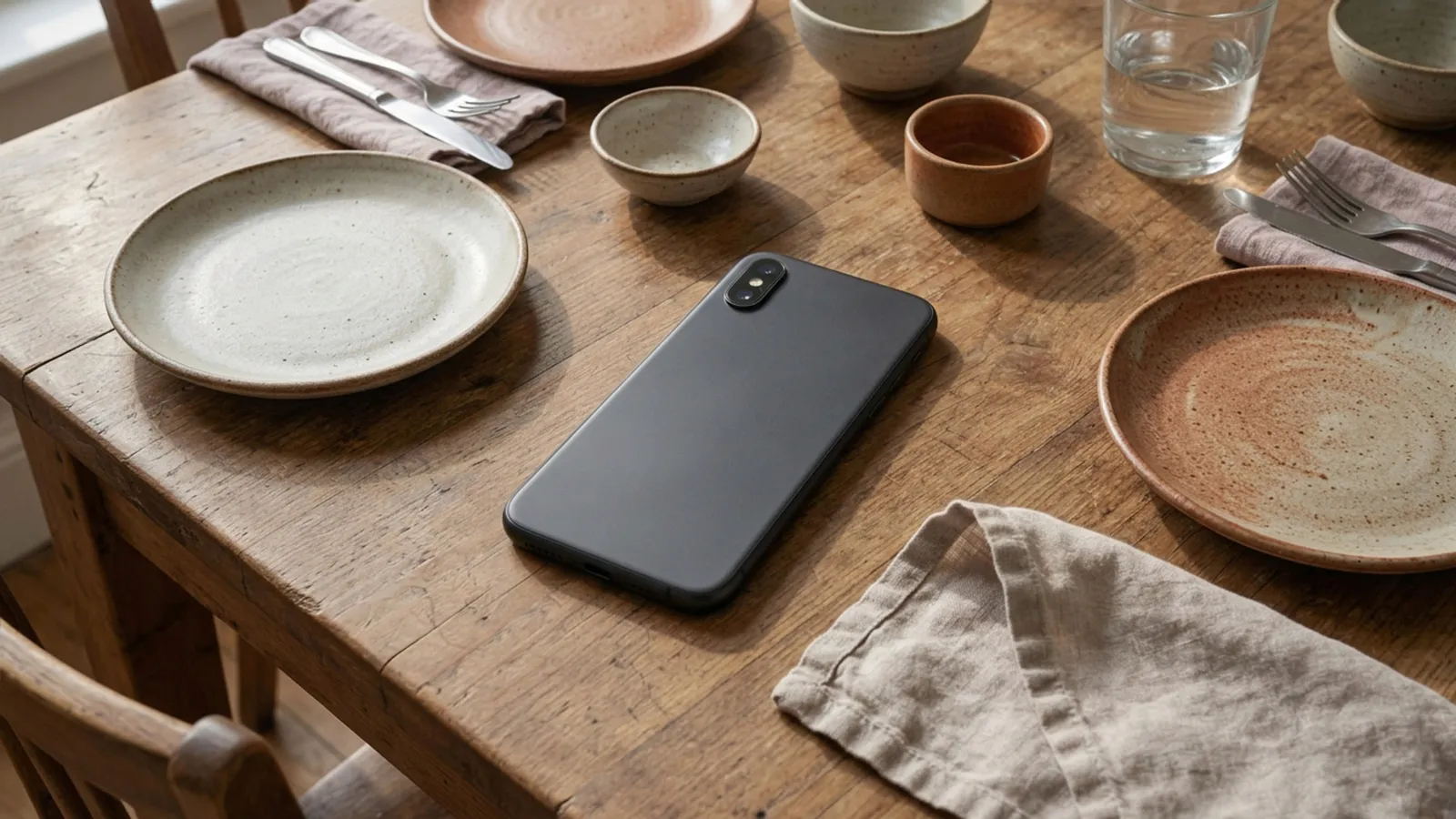
A phone on the dinner table can be a distraction, a way to stay reachable or part of how someone communicates. Before deciding what everyone should do with devices, name the problem you actually want to solve. “We want to be able to talk at dinner” is a better starting point than “phones are bad.”
Pick one room and one situation
The American Academy of Pediatrics suggests a media plan that fits your family’s routines and revisiting and revising it often (American Academy of Pediatrics, checked November 19, 2026). Start with a time that comes up often, such as dinner or shared quiet hours. Decide what you want people to do and who it applies to. For example, “During dinner, put devices aside unless you’re expecting a call or using one to communicate.” People can say they’re expecting something without explaining private details.
Include exceptions and guests
Talk about work, accessibility, care responsibilities and anyone who needs to be reachable. Agree what to tell guests if you’d like them to follow the same routine. For bedrooms or private spaces, discuss the household concern, such as noise after a certain hour, and what would solve it.
See how it works in practice
Try the agreement for a week. Ask what improved, which exceptions come up frequently and whether the rule still fits. If the disagreement is about whether a particular app supports learning, assess that tool separately. If you need a setting on a specific device, verify it for that device rather than expecting one set of instructions to apply to everyone.
Work through an invented example
A family wants more time to talk at dinner, but one person needs a device to communicate and another may receive an urgent update from work.
They agree that everyone can put notifications aside where practical and can say when they need an exception without explaining private details. Try that narrower agreement for a week and ask whether it leaves more room for conversation.
Try a rule that addresses the particular problem
If conversation at dinner is getting interrupted, put notifications away where practical. Agree how to handle communication devices and urgent availability without asking someone to disclose private details.
At the end of a week, ask what improved and whether the exceptions fit. Review the rule again when the shared activity or people’s needs change.
Make the exception as concrete as the rule
A person waiting for a work call might leave their phone visible and step away when it rings. Someone relying on an accessibility feature may use their device throughout the shared activity. Discuss exceptions before applying the agreement. After a few days, ask whether the problem you started with actually improved. You might keep the dinner rule and leave private rooms alone if no one’s quiet or shared use is affected.
Common questions
Should adults follow the same rule?
Discuss which parts can apply to everyone and name any genuinely different needs. Agree on expectations before calling out another person’s use.
What about visitors?
Let guests know what your household is doing and make any request politely. Keep exceptions available when someone needs their device.
Should we change a setting to enforce the agreement?
First see whether the agreement itself solves the problem. Use device-specific guidance for settings and discuss what the change would do.
Sources
- American Academy of Pediatrics. How to Make a Family Media Plan. Checked November 19, 2026.